SBS FORGE

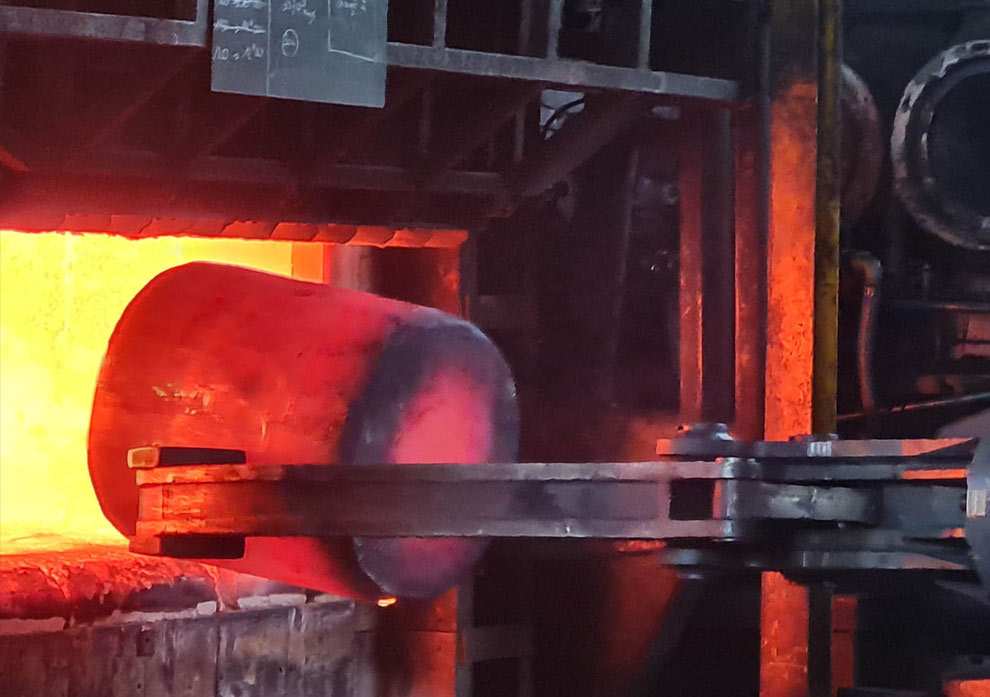
At its Boën site in the Loire region, SBS produces technical and complete forged parts, from ingots to finished products, in free forging and circular rolling.

The forge of Boën was created at the end of the 19th century and its know-how has developed with the technological evolutions in response to the industrial needs of each era.

This experience, accumulated over more than a century, translates today into a solid corporate culture, technical mastery and a strong capacity for evolution and adaptation.

Today, SBS is pursuing its modernization strategy based on operational excellence in order to offer the best possible customer experience.

SBS in 3 figures

10000

tons forged
each year

25670

square meters
of implementation

65

employees

Expectations

The parts are forged, processed, and machined in batches ranging from one to 200 pieces, with the majority of series ranging from 1 to 10 pieces of a few kilos to 5 tons.

Each production batch is certified by a series of tests defined by the specifications. The production team is composed of about 40 people divided into 2 or 3 teams depending on the load levels.

SBS is a major player in the supply of forged products for the defense and civil nuclear fields, and the project is in line with the desire to be structured for the start-up of future programs.

The objectives were:

  • Reduce the time it takes to go through the rooms,
  • Improve the customer service rate (On Time Delivery),
  • Free up cash by reducing work in progress,
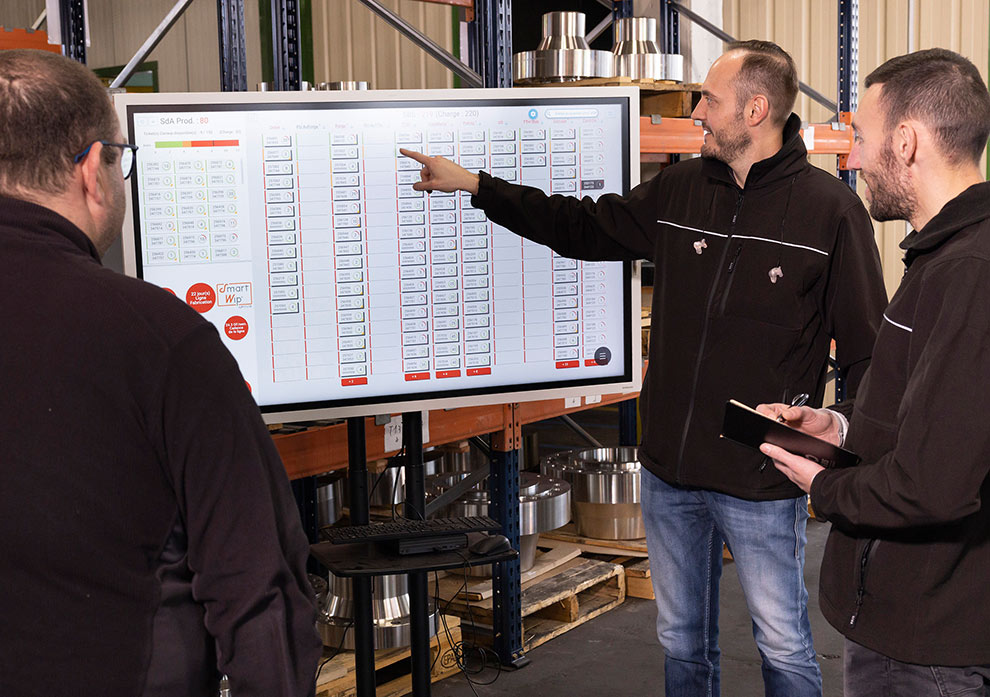
  • To give visibility to the Production Manager in a context of large workshop surface,
  • Provide visibility and reliability to the sales team for project follow-up with customers.

Solutions

The project was conducted in two stages:

  1. A first step of field diagnosis and training to verify the feasibility of a Conwip loop and explain the principles of this pull flow,
  2. A second stage of deployment of the SmartWip digital control solution.

All the people in the SBS company have been trained in the Conwip method. This is for us a very important point to ensure the success of the project.

Work-in-progress was progressively reduced at a constant and controlled rate. During this reduction phase, the Project Manager monitored the number of incoming and outgoing WOs each week, as well as the level of work-in-progress.

Once the WIP was stabilized at the optimal target level we had calculated, production was run in a Conwip steady state: one new WO engaged for each completed WO. This ensured a constant WIP and a stable throughput time for the WOs.

Results

The main results of this Digitized Pull-Flow project are as follows:

  • 53% reduction in work-in-process and lead times,
  • Increase and stabilization of the turnover,
  • Improved exchanges between the sales department and the production department for decisions on customer priorities,
  • Improved OTD on all products.

Our other success stories

AGCEI

AGCEI optimizes its production, increasing its service rate from 60% to 90% thanks to the CONWIP method and the SmartWip planning tool.
logo NTN EUROPE

NTN EUROPE

In 3 months, the lead time in the CONWIP loop for spherical rollers has been halved and is now sustainably stabilized